Film Location Recce Checklist: What Producers Need to Check Before Booking
Before you finalise contracts and begin moving heavy equipment into a property, conducting a thorough technical recce is absolutely essential. A production location recce is an extensive site visit undertaken by key crew members—typically the director, director of photography, production designer, and location manager—to assess a site’s logistical, technical, and creative viability.
If you are planning to hire a filming location in London or explore broader UK film locations, securing a beautiful aesthetic is only half the battle. You must ensure the space can practically support a working crew without compromising the shoot schedule or safety. This comprehensive film location recce checklist will guide producers through everything they need to verify before securing a booking.
What to Document During Your Visit
A successful recce relies on meticulous documentation. Do not rely on memory; always ensure your team captures the following practical details while on site:
Photographs and Videos: Take wide-angle shots of every room from multiple corners. Photograph all access routes, parking areas, and potential hazards. Record a continuous walk-through video to give your wider crew context regarding the property’s layout.
Accurate Measurements: Use a laser measure to check door frames, narrow corridors, stairwells, and ceiling heights. This ensures large equipment, lighting rigs, and custom set builds can safely pass through the property.
Critical Questions: Ask the property owner about historical neighbourhood restrictions, upcoming local construction work, or quirky property rules that might impact your ability to shoot efficiently.
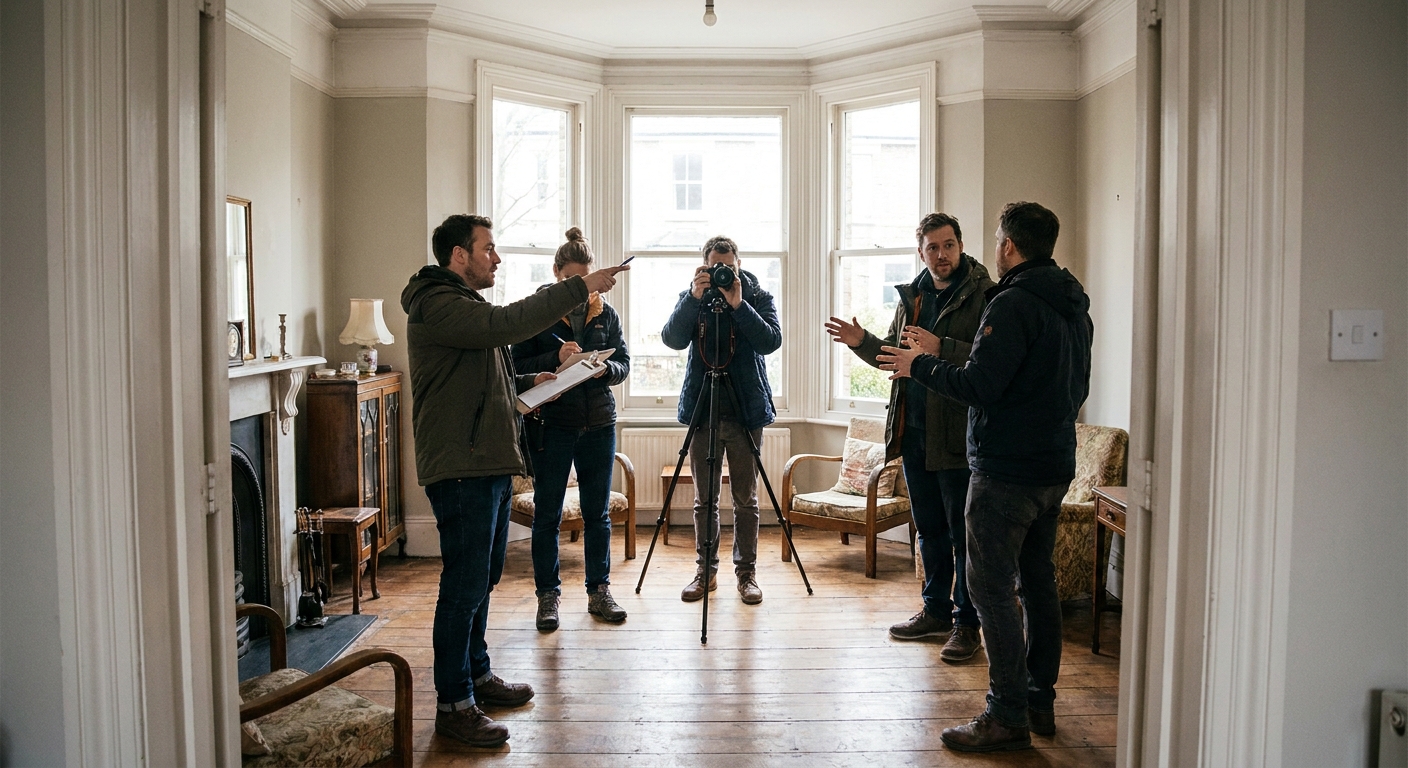
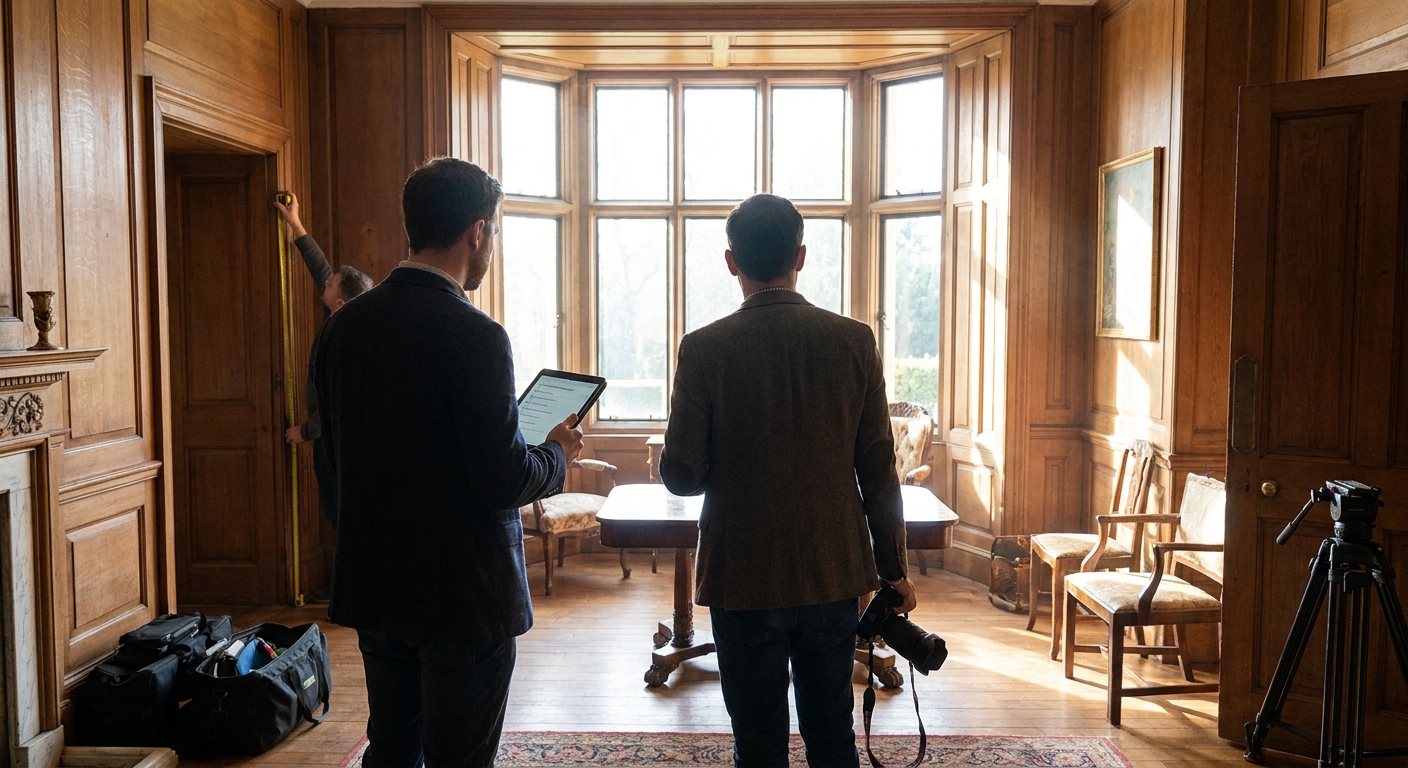
www.creativelocation.co.ukReviewing technical requirements and access points during a film location recce.
The Ultimate Film Location Recce Checklist
To ensure nothing is missed, we have categorised the most vital checks by the primary operational concerns of any professional production.
Creative Suitability, Light and Sound
Natural Light and Blackout: Note the orientation of the property and track the sun’s path throughout the day using a compass app. Check if the windows can be easily blacked out for controlled lighting setups, and whether temporary blackout materials will damage delicate window frames.
Sound and Neighbourhood Restrictions: Pause and listen to the ambient noise. Are there regular flight paths, nearby train lines, or heavy road traffic? Ask the owner about local neighbourhood restrictions regarding noise, late-night working, or heavy vehicle movement that could disrupt audio recording or prompt complaints from residents.
Logistics: Access, Parking and Unit Base
Access and Loading: Evaluate the loading bays and primary access routes. If the location is on an upper floor, check if there is a suitably sized goods lift. If only stairs are available, assess their width and structural integrity for moving heavy camera and lighting equipment.
Parking and Unit Base: Determine exactly where technical vehicles will park. If street parking is required, you must arrange parking suspensions with the local council well in advance. Identify whether there is a nearby space suitable for establishing a comprehensive unit base for dining buses and facility vehicles.
Technical Requirements: Power and Connectivity
Power and Three-Phase: Locate the main consumer unit. Calculate whether the standard 13-amp domestic sockets can handle your lighting plan, or if the property offers three-phase power. If house power is insufficient, you will need to plan a safe location for silent generators.
Internet and Mobile Signal: Reliable communication is critical for production coordinators and remote clients. Check the mobile phone signal across different networks and ask the owner to verify the property’s broadband upload and download speeds.
Facilities for Cast and Crew
Rooms for Hair, Makeup and Wardrobe: Identify well-lit, spacious rooms that can be dedicated to hair, makeup, and wardrobe, preferably close to the main shooting space but out of the direct line of sight.
Holding Areas and Catering: Ensure there is a comfortable holding area for supporting artists and a designated, easily cleaned space for catering setups and crew dining.
Toilets: Check the number of functioning toilets. A standard residential bathroom can only accommodate a very small crew. For medium to large productions, you will need to arrange external honeywagons.
Administration, Protection and Restoration
Permissions and Insurance: Confirm that the property owner has the legal right to hire out the space. Ensure your Public Liability Insurance (PLI) is adequate for the specific risks associated with the location.
Risk Assessment: Identify trip hazards, fragile surfaces, unguarded drops, and clear fire escape routes to compile a robust health and safety risk assessment.
Floor and Property Protection: Plan how to protect the property from damage. Note where heavy-duty Correx sheeting will be needed for hard floors, and where layout board or carpet film is required.
Schedule and Overtime: Discuss access times meticulously. Clarify what constitutes a standard working day and establish the hourly rate for overtime if the shoot inevitably runs late.
💡 Tip for Restoration: Always agree on a restoration protocol beforehand. Photograph the existing condition of the location before loading in any equipment. This protects your production from being held liable for pre-existing damage when returning the property to the owner.
Recce Essential Equipment Checklist
Ensure your location manager or production coordinator brings the right tools to capture accurate data during the site visit.
Equipment Category
Essential Items to Bring
Measuring Tools
Laser measure, 8m physical tape measure
Photography
Camera with wide-angle lens, smartphone for video
Documentation
Clipboard, printed checklists, digital property floor plans
Technical Apps
Sun path tracker (compass), decibel meter app
How Creative Location Streamlines Your Production
Finding the perfect backdrop and handling the subsequent logistics can be overwhelming. At Creative Location, we help productions shortlist highly suitable properties tailored precisely to your creative brief and technical demands.
We coordinate recce arrangements directly with property owners, ensuring your crew has the access needed to make informed decisions. Our experienced team understands the intricacies of a thorough film location recce checklist, meaning we ask the critical questions regarding parking suspensions, power capabilities, and permissions before you even step through the door. By managing these initial logistics and the associated paperwork, we allow location managers and producers to focus entirely on the creative execution of the project.
Find Your Next UK Film Location
Browse our curated portfolio of shoot-ready properties and let us help coordinate your next technical recce.
Securing an ideal commercial shoot location requires more than aesthetic appeal. Before agreeing to hire a filming location, asking the right questions is vital. This approach prevents delays, costs, and compromises. Here are ten questions producers ask. 1. Does the Space Offer Creative Suitability and Shootable Angles? A location might look stunning in a portfolio, …
Brand activations have become one of the most powerful ways for companies to meet their audiences in real life. As consumers spend more time discovering products through creators, athletes and online communities, brands are looking beyond conventional advertising and creating experiences people can attend, film and share. The concept may begin with a campaign …
Have you ever watched a blockbuster film and marvelled at the stunning, meticulously designed interiors? Often, those are not purpose-built studio soundstages; they are real, everyday properties. When production teams hire a house for filming, they undertake an extraordinary logistical and creative process to turn a domestic space into a tightly controlled working environment.From laying …