Securing an ideal commercial shoot location requires more than aesthetic appeal. Before agreeing to hire a filming location, asking the right questions is vital. This approach prevents delays, costs, and compromises. Here are ten questions producers ask.
1. Does the Space Offer Creative Suitability and Shootable Angles?
A location might look stunning in a portfolio, but you must know if it works for your storyboard. Ask about natural light direction and if rooms are deep enough for lenses. Consider if the layout allows your camera crew to capture wide shots without hitting walls.
2. Are There Restrictions on Access, Loading, and Vehicle Dimensions?
Logistics break demanding schedules. Confirm access routes for equipment trucks. Ask if low bridges, narrow gates, or tight stairwells could block lighting carts. If booking in a city centre, clarify loading bay availability and whether you must suspend parking bays to safely unload equipment.
3. What is the Maximum Capacity for Crew and Talent?
Every property has a comfortable limit. A space that accommodates a small editorial team might be overwhelmed by a television crew. Be transparent about your total headcount, including clients and catering staff. Exceeding agreed capacity breaches hire terms and causes friction with owners.
4. Can the Supply Handle Our Power, Three-Phase, and Generator Needs?
Residential properties feature standard wiring that trips under continuous film lighting. Ask if the property has a three-phase power supply for production use. If not, ask if you can bring a silent generator, where it can be parked safely, and how cables will be managed securely.
5. Are There Noise Restrictions, Neighbours, or Strict Working Hours?
If recording sync sound, ambient noise is a critical factor. Ask about nearby construction or flight paths. Query the location’s rules: what are the earliest arrival and latest wrap times? Strict residential associations often prohibit noise before eight in the morning, directly impacting your scheduling.
6. How is Parking Managed, and Do We Need Local Permits?
Parking is a notorious challenge when securing London production locations. Find out how many vehicles fit on private land. For larger shoots, ask if there is a nearby unit base to hire. It is also crucial to ask whether the local council requires specific filming permits.
7. Are There Areas for Hair, Makeup, Wardrobe, Catering, and Toilets?
Behind the camera, you need functional spaces to keep production moving efficiently. Ask which rooms can be repurposed as green rooms or styling areas. Ensure space for wardrobe rails and caterers. Confirm the number of working toilets; if there is only one, arrange external honeywagons.
8. What Are the Rules for Set Dressing and Property Protection?
Most owners expect some rearrangement, but boundaries must be clear. Ask if your art department is permitted to paint temporary walls or remove existing furniture. Crucially, ask what property protection is mandatory. Layout board for floors and corner protectors are standard, but knowing specific expectations prevents costly claims.
9. What is Required for Insurance, Risk Assessment, and Specialist Activities?
Never assume standard public liability insurance covers every scenario. Ask the owner if they need a copy of your policy and a detailed risk assessment. If your script involves specialist activities, such as using atmospheric smoke or practical fire, ask for explicit written permission beforehand.
10. What Are the Rate Inclusions, Overtime, Cancellation, and Restoration Terms?
Financial clarity is paramount. Ask exactly what the daily rate includes and what constitutes overtime hours. Clarify the damage deposit required and the timeline for its return. Finally, ask about cancellation policies and the expected standard of restoration, determining whether you need to hire professional cleaners.
Compact pre-booking checklist
- Confirm the agreed access and wrap times.
- Record the permitted crew and talent headcount.
- Verify power capacity and any generator requirements.
- Agree parking, loading and unit-base arrangements.
- Confirm property-protection and restoration requirements.
- Document overtime rates, deposits and cancellation terms.
Why a Recce is Essential
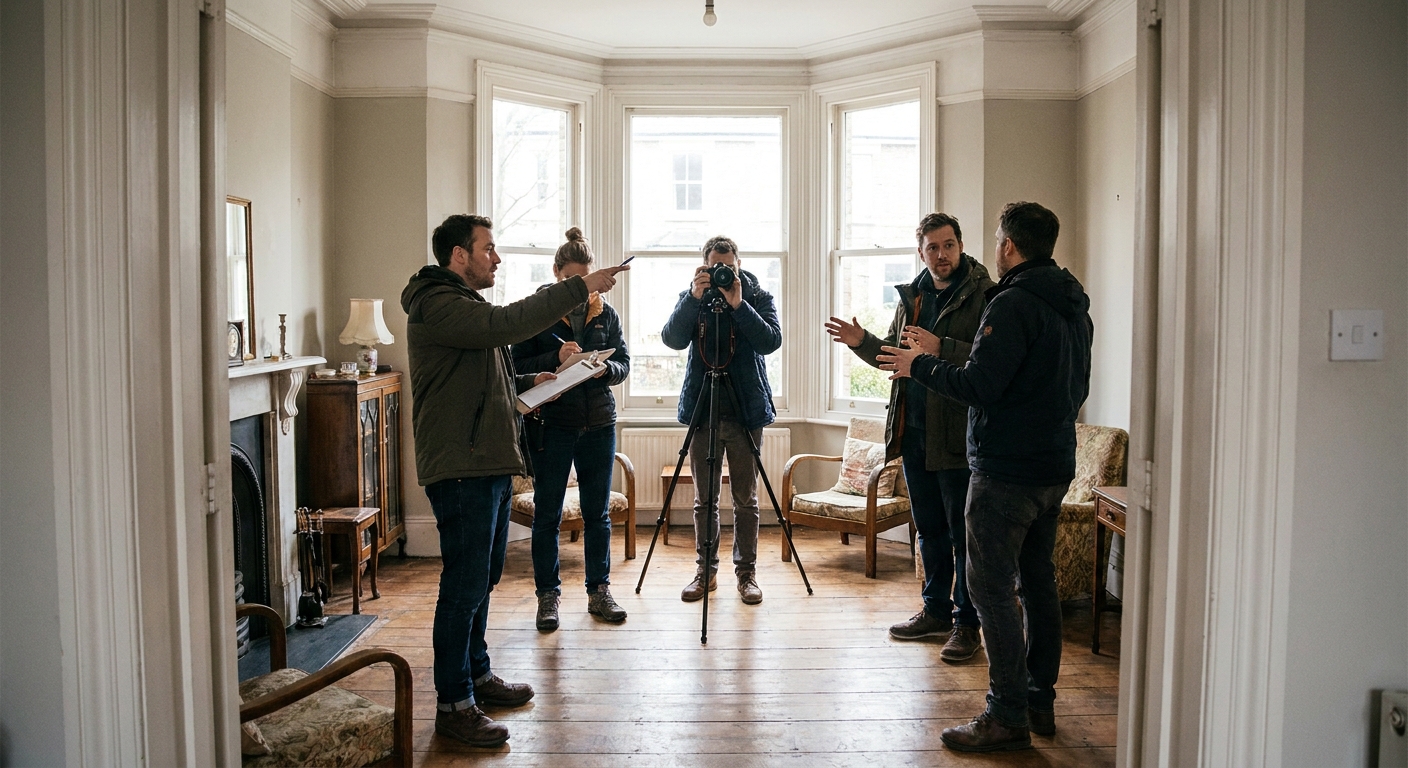
While asking these ten questions forms the foundation of your production agreement, a physical technical recce remains a necessity. Viewing a space in person reveals logistical nuances that photographs cannot capture. For insights on planning your next shoot, browse our detailed production blog or explore our portfolio of commercial filming locations UK to find your match.
How Creative Location Helps
Navigating practical queries can be time-consuming for production teams. We actively help translate your creative brief into a targeted shortlist of suitable properties. By coordinating complex logistical questions directly with location owners on your behalf, we ensure you have complete clarity and confidence before you ever step foot onto the set.
Ready to Find Your Next Space?
Whether you need a contemporary home, studio, warehouse or unusual event space, Creative Location can help you find a setting that works creatively and practically.
Start Your Project